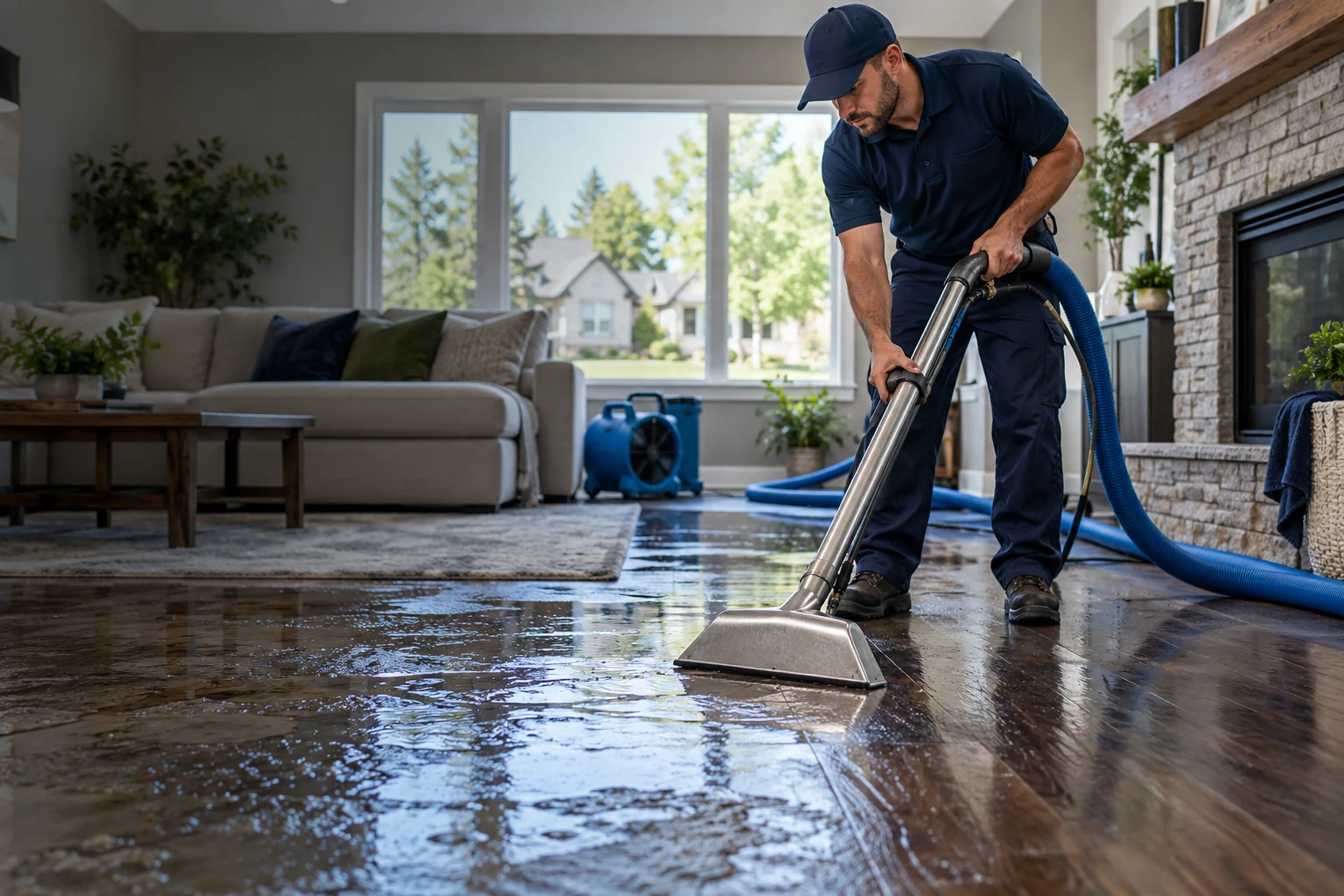
Standing water can spread from one room into flooring, wall cavities and the spaces below. Water Mitigation Pros helps property owners arrange prompt water extraction after pipe failures, appliance leaks, indoor flooding and other water losses. Call (877) 958-8890 to describe the source and the rooms affected. We explain how removal fits into a complete cleanup and drying plan, so you know what happens after the puddles are gone.
Your first concern should be safe access. Keep away from water near electrical outlets, appliances or equipment, and follow any instructions from emergency responders or utility professionals. If the source can be stopped from a safe, dry location, tell us what has already been done. Do not enter an affected room simply to estimate the water depth or move belongings.
Remove standing water with the right equipment
The extraction approach depends on access, water depth, flooring and contamination. Pumps and extraction equipment are selected for the conditions rather than treating every flooded room the same way. We assess where water has traveled and discuss whether finishes or other materials need to be moved or removed. That assessment helps avoid overlooking water beneath a surface that appears unaffected.
A clean supply-line leak and a sewage backup need different handling. Tell us about any suspected sewage, outdoor floodwater or unknown source when you call. Contaminated water may require the additional steps described on our sewage cleanup page. A plumber or another qualified professional may also be needed to correct the cause before extraction can provide a lasting benefit.
Move from extraction into controlled drying
Extraction removes bulk water, but it does not prove that the building materials are dry. Subfloors, wall assemblies and cabinets can retain moisture after visible water is removed. We explain where drying equipment and moisture checks may be needed. The aim is to address the affected structure before repairs hide damp areas.
Homeowners can ask about protecting furnishings and maintaining a clear path through the house. Property managers can discuss occupied units, shared corridors and access for equipment. We document affected areas and the work performed so you have useful records for your insurance company. For help connecting removal, cleaning and repairs, explore our water damage restoration service or call to discuss your property.
Questions about professional water extraction
Is extraction enough to finish the cleanup?
Usually there is more to assess after standing water is removed. Materials can hold moisture below the surface. Drying, cleaning or selective removal may still be needed.
Can you extract water from carpet?
Call to discuss the flooring and the source of the water. The material, contamination and amount of damage determine what may be restorable. We explain the proposed approach before removal decisions are made.
How soon should I call?
Call as soon as you discover the problem and can do so safely. Share whether water is still entering and which rooms are affected. Avoid entering standing water to gather more information.