
A room can look dry while moisture remains in the materials beneath it. Water Mitigation Pros helps property owners arrange structural drying after leaks, flooding and water extraction. Call (877) 958-8890 to discuss the affected rooms and the cleanup already completed. We explain where moisture needs to be checked and how drying fits into getting the property ready for repairs.
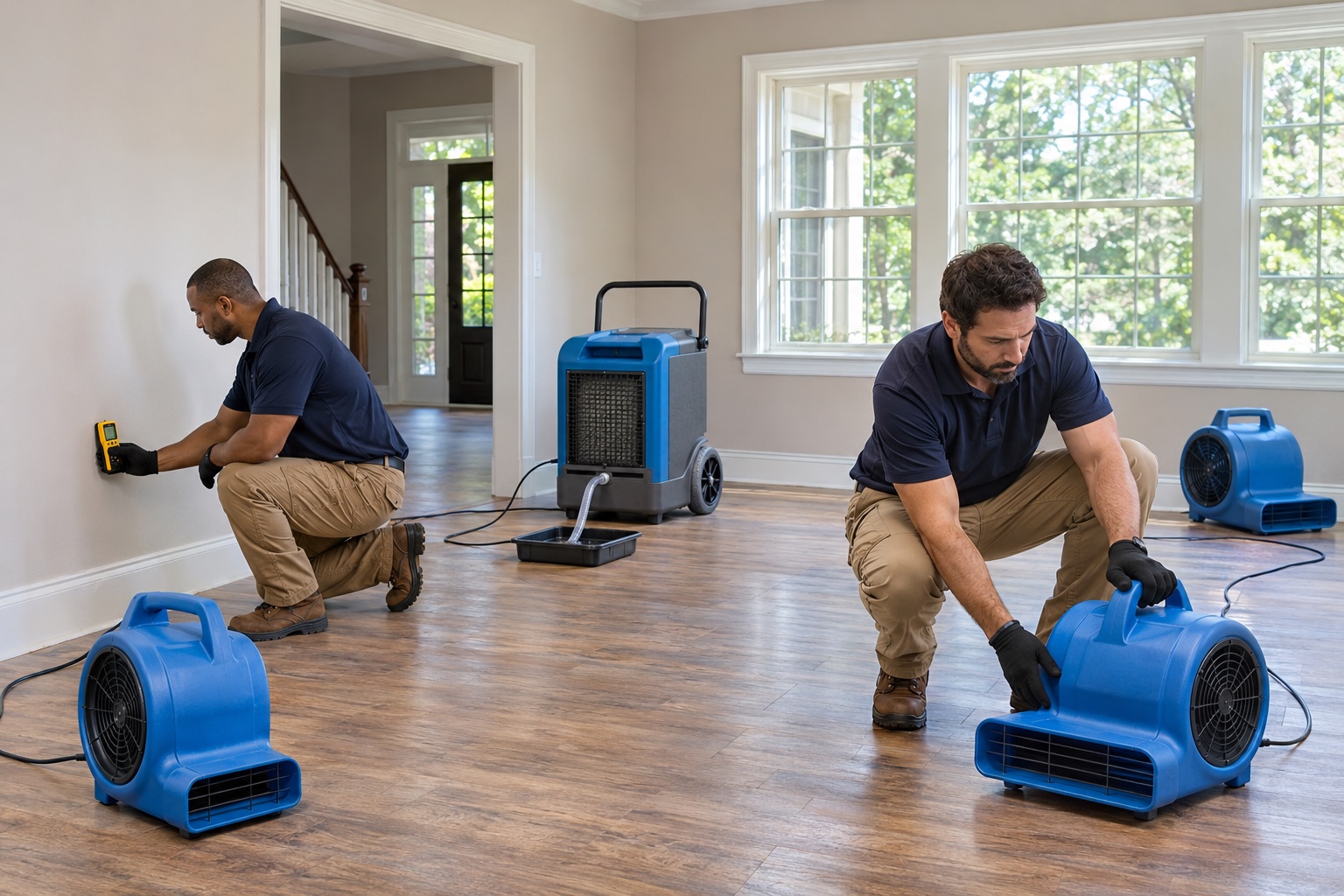
Structural drying addresses building materials rather than just the water you can see. A subfloor, wall cavity or cabinet base may dry differently from the surface beside it. The materials involved, the extent of wetting and access to damp areas all affect the plan. We assess those conditions so equipment placement and monitoring match your loss.
Use moisture checks to guide the work
Air movers, dehumidifiers and other drying equipment have different jobs. Air movement supports evaporation, while dehumidification helps remove moisture from the air. Equipment selection and placement should account for the room and the materials being dried. Measurements help the team evaluate progress instead of relying only on appearance or a fixed number of days.
Before drying starts, the water source and any contamination need attention. Bulk water should be removed through water extraction, and sewage-related damage may require cleaning or material removal first. Running a household fan through a contaminated space is not a substitute for that assessment. Tell us if water is still coming in or if the source is uncertain.
Know when the structure is ready for repairs
There is no single drying timetable that fits every property. Dense materials, layers of flooring, restricted access and continuing moisture can all change the work. Ask what is being monitored, how progress will be explained and what conditions need to be met before equipment is removed. Our structural drying timeline guide explains the questions that matter more than a blanket promise.
While equipment is running, keep the agreed work area and power arrangements as instructed by the team. Tell us about noise concerns, occupied rooms and building access so those needs can be discussed early. Drying records can also help explain the work to your insurance adjuster. We connect drying with the broader restoration plan so remaining repairs are based on the condition of the affected materials.
Questions about structural drying after water damage
How many days does structural drying take?
The answer depends on the materials, access and moisture conditions. Ask for an initial estimate and how it will be updated. Measurements should guide the drying decision, rather than a universal deadline.
Can I switch the equipment off at night?
Discuss noise and access concerns with the team before changing the setup. Turning equipment off can interrupt the drying plan. Report a safety concern immediately and follow the instructions provided for the equipment.
Does a dry surface mean the wall is ready?
Not necessarily. Moisture can remain inside an assembly after its face feels dry. The team should explain the measurements and observations used to assess readiness for repairs.