
Mold concerns after a leak often begin with a simple misunderstanding: the room looks dry, so the damage must be finished. Water can remain in materials below a floor or inside a wall after the visible puddle is gone. That moisture can support growth on suitable materials if it is not addressed. The important question is where the water went, not only whether the surface now feels dry.
The EPA recommends drying wet materials promptly, generally within 24–48 hours, to help prevent mold growth. That guidance is a reason to act quickly, not a promise that every property follows an exact clock. The source, materials and conditions at the property still need assessment. Sewage and other contamination also require attention beyond ordinary drying.
Hidden damp areas need more than fresh paint
Water may travel behind baseboards, beneath cabinets and through gaps into adjoining spaces. A stain can show one part of that route while leaving other damp areas out of sight. Painting over the mark or replacing a small patch of flooring may cover the evidence without resolving the moisture. A cleanup assessment should consider the materials that were wet and whether the source has been corrected.
An odor or visible growth deserves a careful discussion rather than a guess based on color. Tell the restoration team where you noticed the problem, when the leak occurred and what work has already been done. Do not disturb suspected mold simply to investigate the wall behind it. Photographs taken without entering an unsafe area can help explain your concern when you call.
Drying and source correction work together
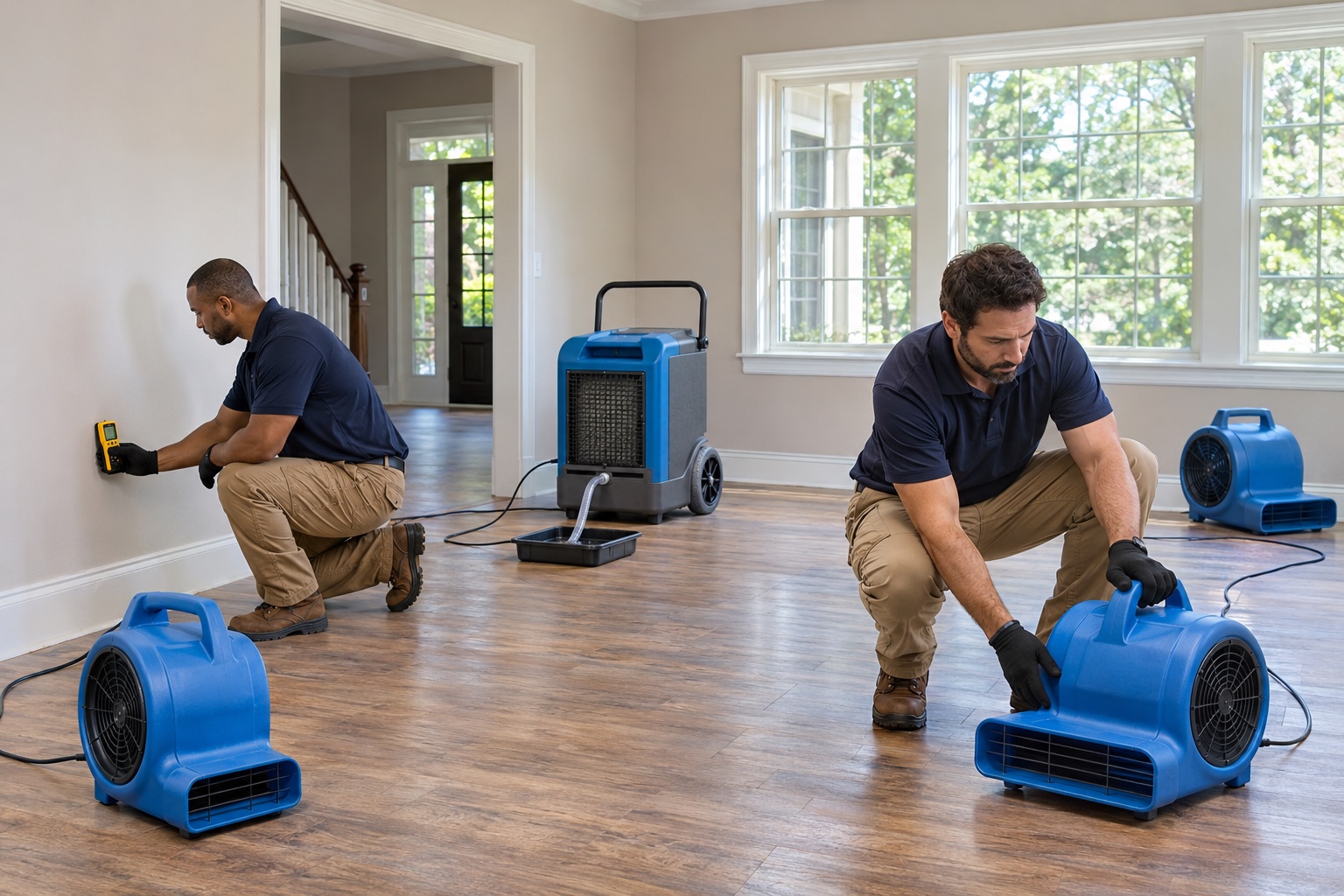
Structural drying addresses moisture held in building materials through an appropriate equipment and monitoring plan. It is different from setting out a fan and waiting for a room to feel better. The team should explain what is being measured, where equipment is needed and which materials may require removal. That information helps you understand the work before repairs close the affected areas.
Correcting the source matters just as much as cleaning up the result. A plumber, roofer or another qualified contractor may be needed depending on the cause. Water Mitigation Pros can discuss water damage cleanup and restoration at (877) 958-8890. If you are unsure whether drying is complete, ask about the moisture checks used before repairs instead of relying on surface appearance.
Questions about why mold can grow after water damage
Does every leak cause mold?
No. The conditions and how the moisture is addressed matter. Prompt assessment and drying help limit the opportunity for growth, without guaranteeing a particular outcome.
Can I close the wall when the stain fades?
A fading stain is not a moisture measurement. Ask how the affected materials were checked and what supports the decision to begin repairs. The original leak also needs to be resolved.