Finding water in your home is stressful enough without discovering that you assumed the wrong insurance would cover it. Homeowners insurance and flood insurance address different risks. Standard homeowners policies generally exclude flooding, although the policy wording and cause of a loss must be reviewed. Discuss your actual coverage with your insurance agent before you need to use it.
The National Flood Insurance Program explains how to purchase flood coverage for eligible homes and other properties. NFIP policies generally have a 30-day waiting period, with specified exceptions. Buying coverage when a storm is already approaching may therefore be too late for that event. Private flood policies can have different terms, so ask about the effective date rather than assuming it starts immediately.
Ask about the cause, the property and the limits
An agent should help you understand how your policies address a sudden indoor leak, surface flooding and a sewer backup. Those situations may involve different coverage or endorsements. Ask which parts of the building and belongings are covered, and which limits or exclusions apply. A brief conversation about your basement, storage areas and equipment can be more useful than relying on a general label such as water damage.
Renters, condo owners and property managers may have different responsibilities for the building and its contents. Check how personal belongings, common areas and unit improvements are treated. Do not assume a landlord’s or association’s policy replaces your own coverage needs. Keep current policy documents and your agent’s contact details somewhere you can access if the property becomes unavailable.
Know the cleanup plan even while coverage is reviewed
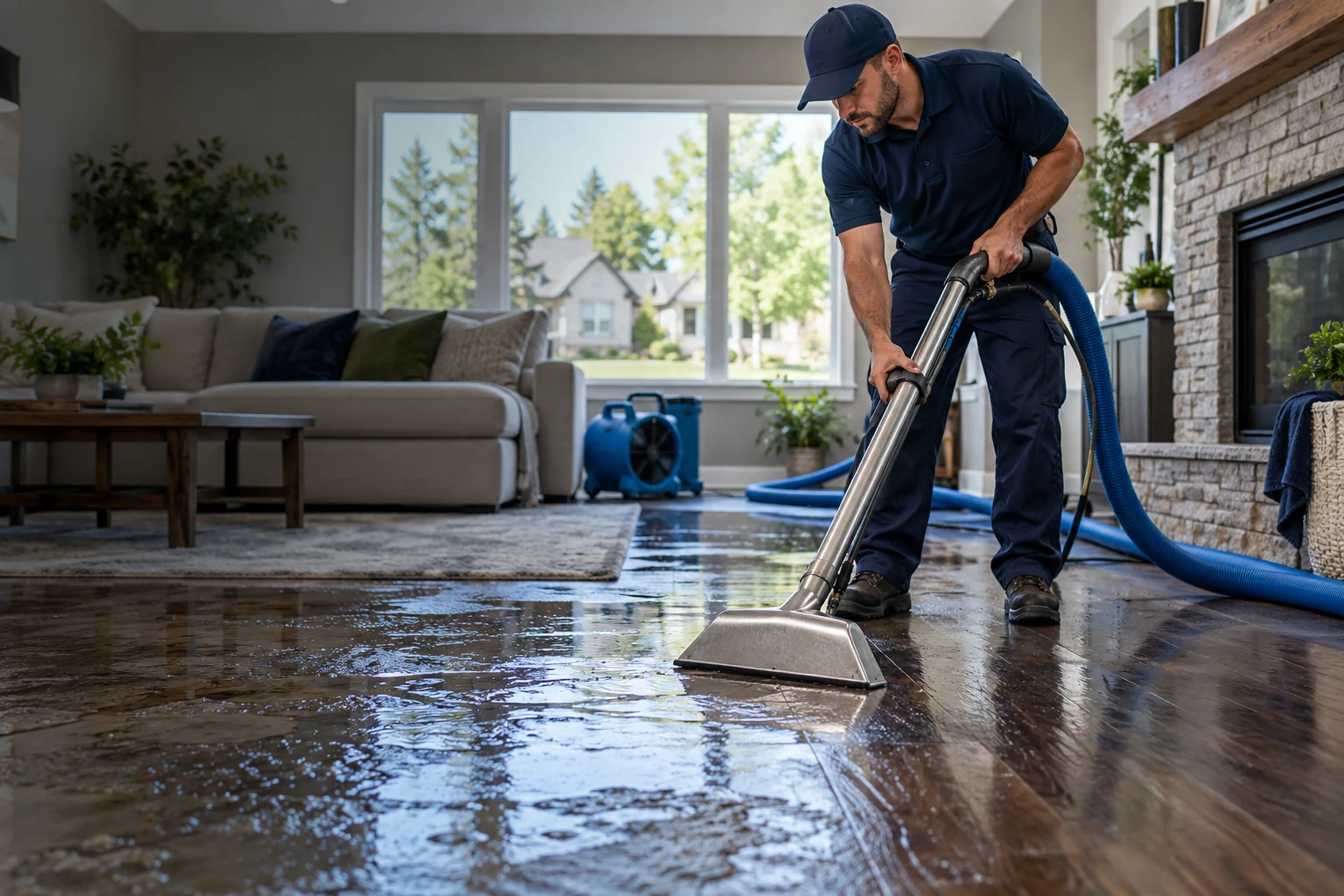
An insurance question does not remove a safety concern at the property. Follow emergency instructions and stay out of standing water near electrical equipment. When it is safe to make arrangements, contact the insurer and ask what documentation it needs while urgent mitigation is discussed. Keep photos and receipts, and explain any immediate work proposed to limit further damage.
Water Mitigation Pros can discuss the water mitigation work needed after water enters; your insurer decides coverage and payment. Call (877) 958-8890 to describe the affected rooms and whether the source is still active. Our insurance claims guide explains how cleanup records can support that conversation. Coverage should be understood before a loss, while restoration decisions should be based on the conditions at the property.
Questions about why flood insurance matters before water enters your home
Does flood insurance cover every type of water damage?
No. Policies have definitions, limits and exclusions. Ask your agent about your specific risks and how flood coverage works alongside other insurance.
Can the cleanup company approve my claim?
No. Your insurance company makes coverage and payment decisions. A restoration team can explain and document its work, but cannot promise that an insurer will pay.