
A burst pipe can change a normal day into an urgent cleanup problem. Your first priority is to keep people away from unsafe conditions, particularly water near electrical equipment or unstable finishes. If you can safely reach a known water shutoff from a dry location, stopping the supply may limit further water entry. If you cannot do so safely, contact the appropriate emergency or plumbing professional instead of entering the affected space.
Once you are in a safe location, note where the leak appears to be and which rooms are wet. Tell a plumber whether the water is still running and explain any access concerns. Contact the restoration team to discuss the damage inside the building. Source repair and interior cleanup are related tasks, but one does not automatically complete the other.
Record what you know without disturbing the damage
Photographs taken from a safe position can help show the affected rooms and belongings. Record when you discovered the leak and any action taken to stop it. Contact your insurer for its reporting and documentation instructions if you intend to make a claim. Avoid guessing about hidden damage or promising that a particular material can be saved before it has been assessed.
Tell the cleanup team about water upstairs, wet ceilings, cabinets or rooms beside the visible leak. Water may have traveled beyond the original wet spot. A ceiling that is sagging or shedding material needs caution rather than close inspection by an occupant. Share those observations from outside the unsafe area and follow professional instructions about access.
Remove water and assess the materials left behind
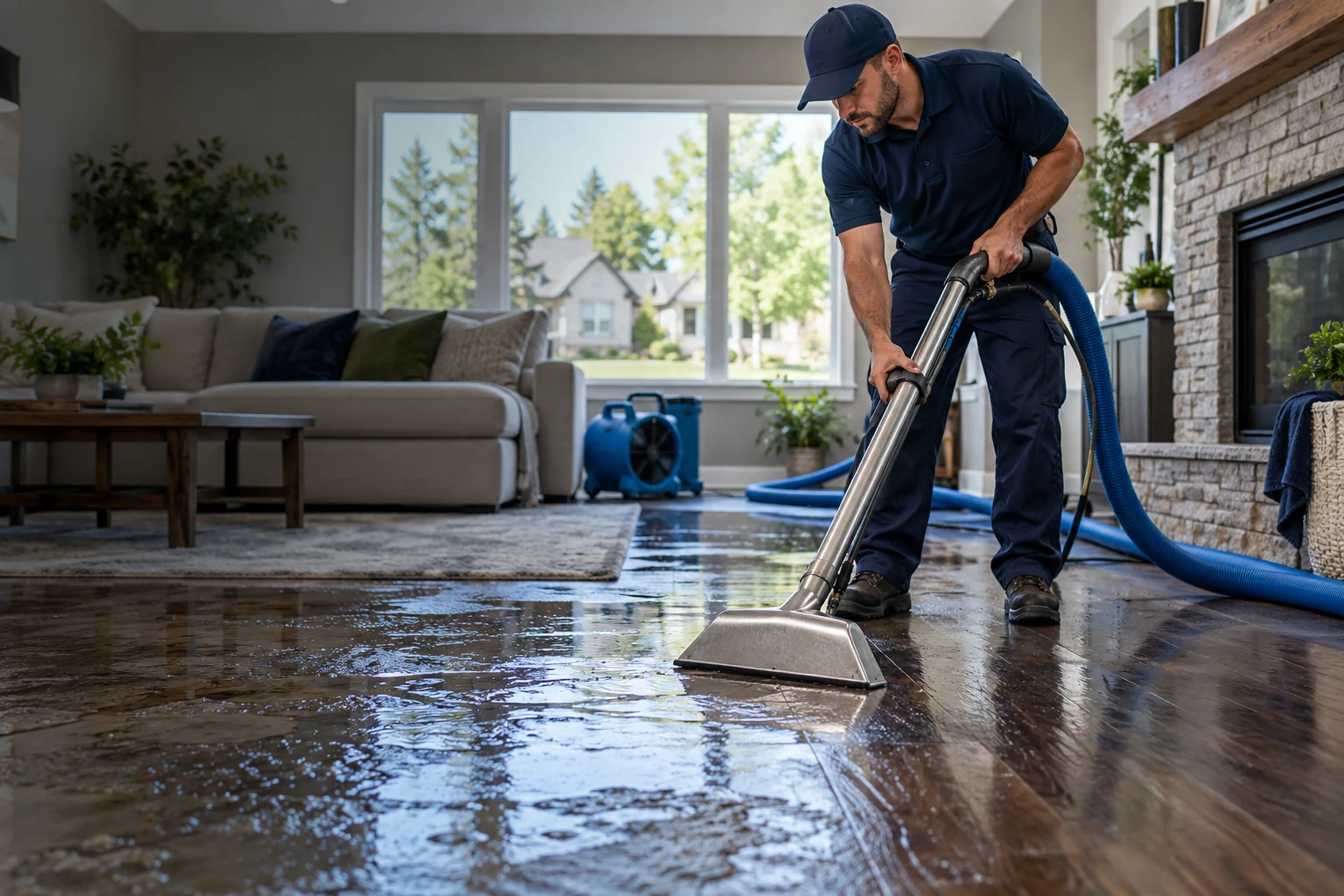
Water extraction can remove accessible standing water, but damp materials may still require drying or removal. Ask the restoration team to explain what it has found and which areas need further assessment. The plan should account for flooring, wall assemblies and contents affected by the leak. Moisture checks and structural drying help guide the work before repairs cover those areas.
Call Water Mitigation Pros at (877) 958-8890 to discuss the cleanup and the property’s access needs. Homeowners can ask about using unaffected rooms, while property managers can plan around tenants and shared areas. Our insurance claims guide explains the difference between documentation of the work and an insurer’s coverage decision. Keep the focus on a safe, complete assessment instead of assuming that stopping the leak has finished the restoration.
Questions about what to do after a pipe bursts in your home
Is a small pipe leak always a small cleanup?
Not necessarily. Water can travel into concealed areas before it is discovered. Tell the team about adjoining rooms and any signs of moisture beyond the source.
Can I begin replacing the flooring right away?
Ask how the affected materials were assessed and whether drying is complete. New finishes can cover unresolved moisture. The restoration and repair scopes should be coordinated.