Terms such as extraction, mitigation and restoration often appear together after a leak. That can make it difficult to understand what a contractor is actually proposing. Extraction means removing bulk water from the affected space. Mitigation is the broader work aimed at limiting further damage and addressing the conditions left behind.
A room can therefore need mitigation even after the standing water is gone. Damp materials, contamination and water in adjoining spaces may still need assessment. The scope should explain which of those conditions are present at your property. A clear estimate connects the services to the damage, rather than listing terms without telling you what they mean.
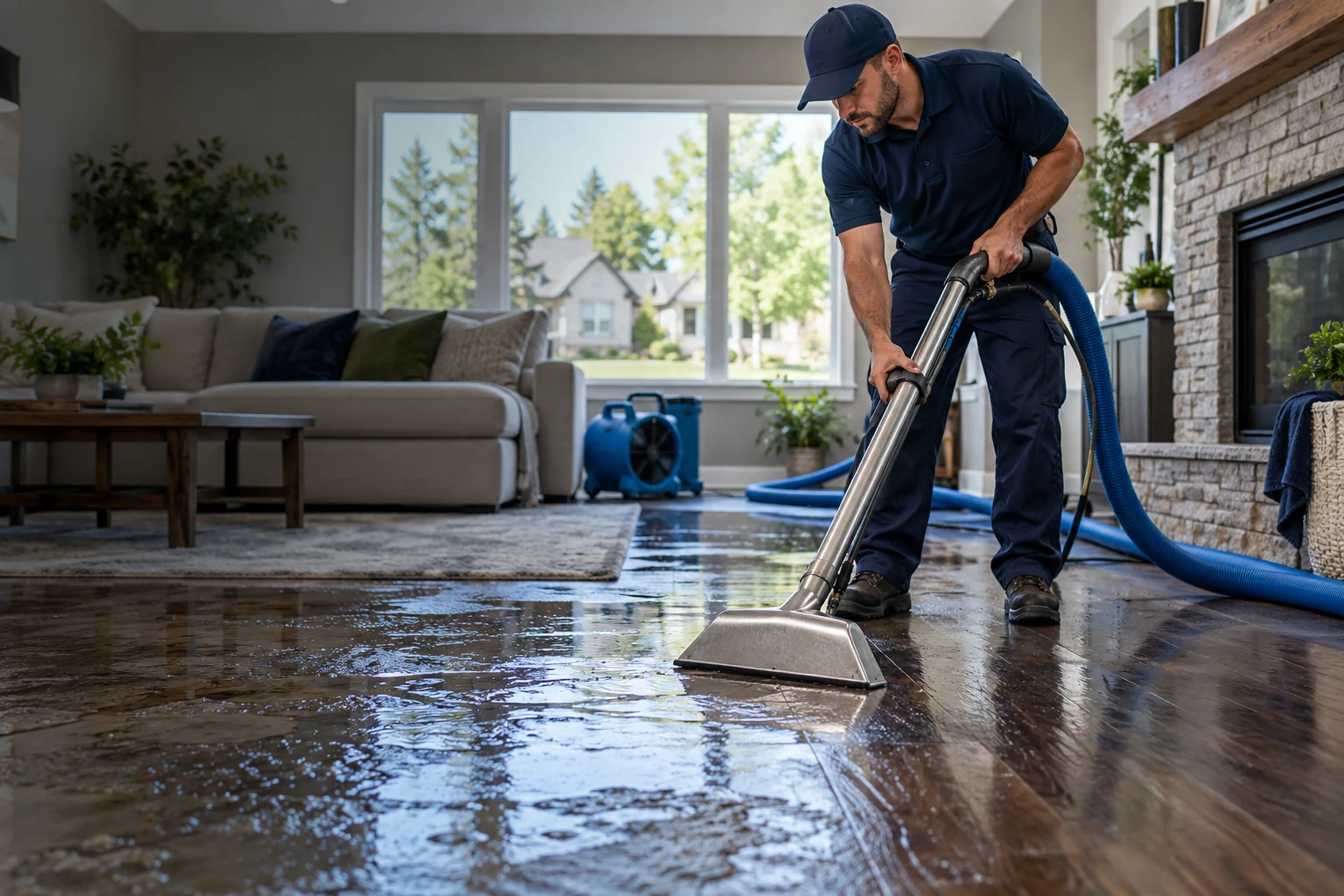
Extraction removes water you can see and reach
Pumps and extraction tools can remove water from accessible floors and other affected areas. The equipment and approach depend on depth, access, flooring and the source. Professional extraction can be an important early step, but it does not by itself confirm that a subfloor or wall assembly is dry. Ask what remains to be checked after bulk removal is complete.
Water that involves sewage or another contamination concern changes the cleanup plan. Materials may need handling or removal that would not be appropriate for an ordinary clean-water spill. Tell the team where the water came from and whether it is still entering. A plumber or another specialist may need to correct the source alongside the interior work.
Mitigation connects protection, cleanup and drying
Mitigation may include protecting unaffected rooms, assessing damaged materials, cleaning and setting up controlled drying. Not every loss needs every service, and the reasons should be explained. Drying equipment and moisture checks address materials that remain after extraction or removal. Decisions about rebuilding should consider those materials rather than only the appearance of the room.
Restoration is the larger effort to return the property toward normal use, including the repairs that follow the cleanup. Ask where the proposed scope ends and which later work will need a separate discussion. Water Mitigation Pros can help you understand that sequence at (877) 958-8890. Explore our water damage restoration page for the connection between initial cleanup, drying and the next stage of repairs.
Questions about water extraction vs. water mitigation: what is the difference?
Can I ask for extraction only?
You can ask what removal work is needed, but unresolved moisture or contamination should still be assessed. Ask the team to explain the consequences of leaving other work out. The scope should reflect the actual conditions.
Is mitigation the same as rebuilding?
No. Cleanup and drying prepare affected areas for later repairs. Confirm which repairs are included in the authorization and which are outside that scope.